
What Is the Best Ceiling for a Finished Basement in Northeast Ohio?
10/2/2025
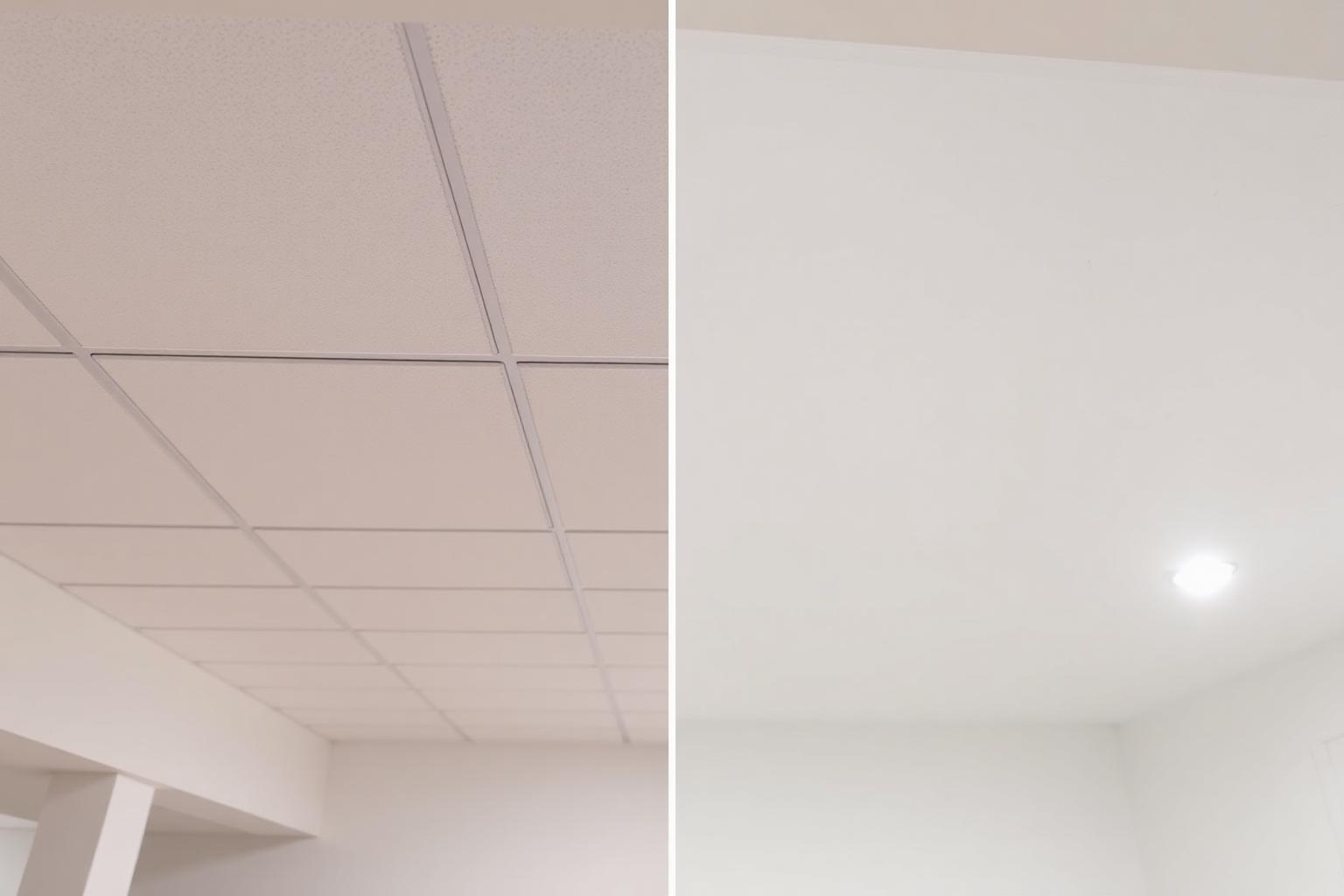
There's No Single Best Basement Ceiling — But There Is a Best One for Your Basement
Every basement ceiling decision comes down to a tradeoff between how it looks, what it costs, how easy it is to maintain, and what's hiding above it. Homeowners in Northeast Ohio have an extra wrinkle: Lake Erie humidity, older plumbing in 1950s ranches, and the occasional water surprise from a hard spring rain. After more than a decade of finishing basements across Willoughby, Mentor, and Painesville, our short answer is this — for most Lake County basements, a well-installed drop ceiling is the smartest choice. But let's walk through the alternatives honestly so you can decide for yourself.
The Four Realistic Options
1. Drop Ceiling (Suspended Ceiling)
A drop ceiling is a metal grid hung from the joists with lay-in tiles dropped into the openings. It's the workhorse of finished basements for good reason: it covers everything cleanly, looks finished, and keeps the entire space above it accessible. Learn more about how we approach drop ceiling installation in Lake County.
Pros
- Easy access to plumbing, electrical, and HVAC above
- Quick to install — typically 1–2 days for a basement
- Tiles can be swapped individually if damaged
- Recessed LED lights integrate cleanly into the grid
- Moisture-resistant and sound-rated tiles available
- Lower cost than drywall in most cases
Cons
- Lowers the ceiling 3–4 inches (sometimes more)
- Not everyone loves the look of a traditional grid
- Cheap tiles can look dated if you go too budget
2. Drywall
Drywall ceilings look the most "finished" and most closely match the rest of the house. They're the right choice when you have plenty of headroom, when nothing important runs through the ceiling, and when you want the basement to feel like a true extension of the main floor.
Pros
- Clean, seamless, modern look
- Best resale appearance
- Better sound deadening when properly insulated
- Slightly thinner profile than a drop ceiling
Cons
- Anything above is permanently buried — pipe leaks become a major repair
- More expensive to install
- Repairs after a leak or wiring change mean cutting, patching, mudding, sanding, priming, and painting
- Requires more skilled labor and longer install time
- Sags or stains if moisture gets above it
3. Exposed and Painted ("Industrial" Look)
This is the budget-and-trendy option: leave joists, pipes, and ductwork exposed, then spray everything a single dark color (usually flat black or charcoal). It hides imperfections by creating visual depth.
Pros
- Cheapest finished ceiling option
- Preserves every inch of headroom
- Trendy in basement bars, gyms, and game rooms
- Full access to everything overhead
Cons
- Dust collects on every surface and is hard to clean
- Insulation must be neat — fluffy fiberglass between joists looks rough
- Loud — no sound dampening at all
- Not for everyone — definitely a "look you love or hate" situation
4. Tongue-and-Groove Wood Planks
Wood plank ceilings give a warm, cabin-like or modern farmhouse feel. They can be installed directly to joists or onto a furring grid.
Pros
- Beautiful, premium appearance
- Adds warmth and character
- Can be stained, painted, or whitewashed
Cons
- Most expensive option per square foot
- Permanently covers utilities, like drywall
- Wood and basement humidity can be a tough combo
- Slower to install
Why We Recommend Drop Ceilings for Most Lake County Basements
Three things tip the scale toward a drop ceiling for the average Northeast Ohio homeowner:
-
What's above your basement ceiling is almost never finished. Drain stacks, water lines, electrical runs, HVAC trunks, sump pump piping, and radon mitigation systems all live up there. The day a pipe sweats or a hose bib backs up, you'll be grateful for a 2x2 tile you can pop out instead of a drywall ceiling you have to cut.
-
Lake Erie humidity is real. Even with a dehumidifier running, basement humidity in the summer here is no joke. Modern vinyl-faced and moisture-resistant tiles handle that better than drywall — and if a tile does discolor, you swap one tile for $5 instead of repainting a whole ceiling.
-
Most local basements are tight on headroom. A drop ceiling only drops things 3–4 inches when planned well. Most homeowners would rather give up those inches than reroute a furnace trunk to make a drywall ceiling possible.
When We'd Steer You Toward Drywall Instead
A drywall ceiling actually does make sense in a few cases:
- You have at least 9 feet of joist height to start with
- Nothing critical runs through the joist cavity (rare, but possible in newer builds)
- The basement is a primary living space — a long-term in-law suite, a permanent bedroom, or a main-floor-quality entertainment space
- Resale is your top priority and the rest of the basement is high-end
Even then, we often recommend a hybrid: drywall over the main living areas and a small section of drop ceiling above the mechanical room or laundry, where access matters most.
A Quick Word on the "Industrial" Painted Ceiling
We love this look in the right space — a home gym, a basement bar, a workshop, or a teen hangout. We don't love it for finished family rooms, guest bedrooms, or anything you'll watch a movie in. The lack of sound dampening is the dealbreaker for most homeowners once they live with it.
Tile Choices If You Go With a Drop Ceiling
The tile is what people actually see, so it's worth spending a little time here. The most common choices we install:
- Smooth white — clean, modern, the most popular pick today
- Fissured / textured white — traditional, hides dust well
- Vinyl-faced moisture-resistant — for damp basements or near a laundry
- Sound-rated — for home theaters or shared walls
- Decorative tegular (recessed-edge) — gives the grid a more refined "coffered" look
What This Costs in 2026
For a typical Lake County basement, a complete drop ceiling installed by a local handyman runs about $4–$9 per square foot, all in. Drywall ceilings typically run $6–$12 per square foot when you include framing adjustments, mudding, sanding, primer, and paint. Wood planks, depending on species, can run $10–$20+ per square foot installed.
The Bottom Line
For most homeowners in Willoughby, Mentor, Painesville, and the surrounding Lake County communities, a well-planned drop ceiling is the best basement ceiling — period. It looks finished, it costs less, it installs faster, and it keeps everything above it accessible the day you need it.
If you'd like a second opinion on what's right for your space, we're happy to come take a look. Call or text 330-715-5042 or request a free drop ceiling estimate and we'll walk through the options with you in person.