
Basement Remodeling Ideas: Why Homeowners Are Choosing Drop Ceilings
4/5/2026
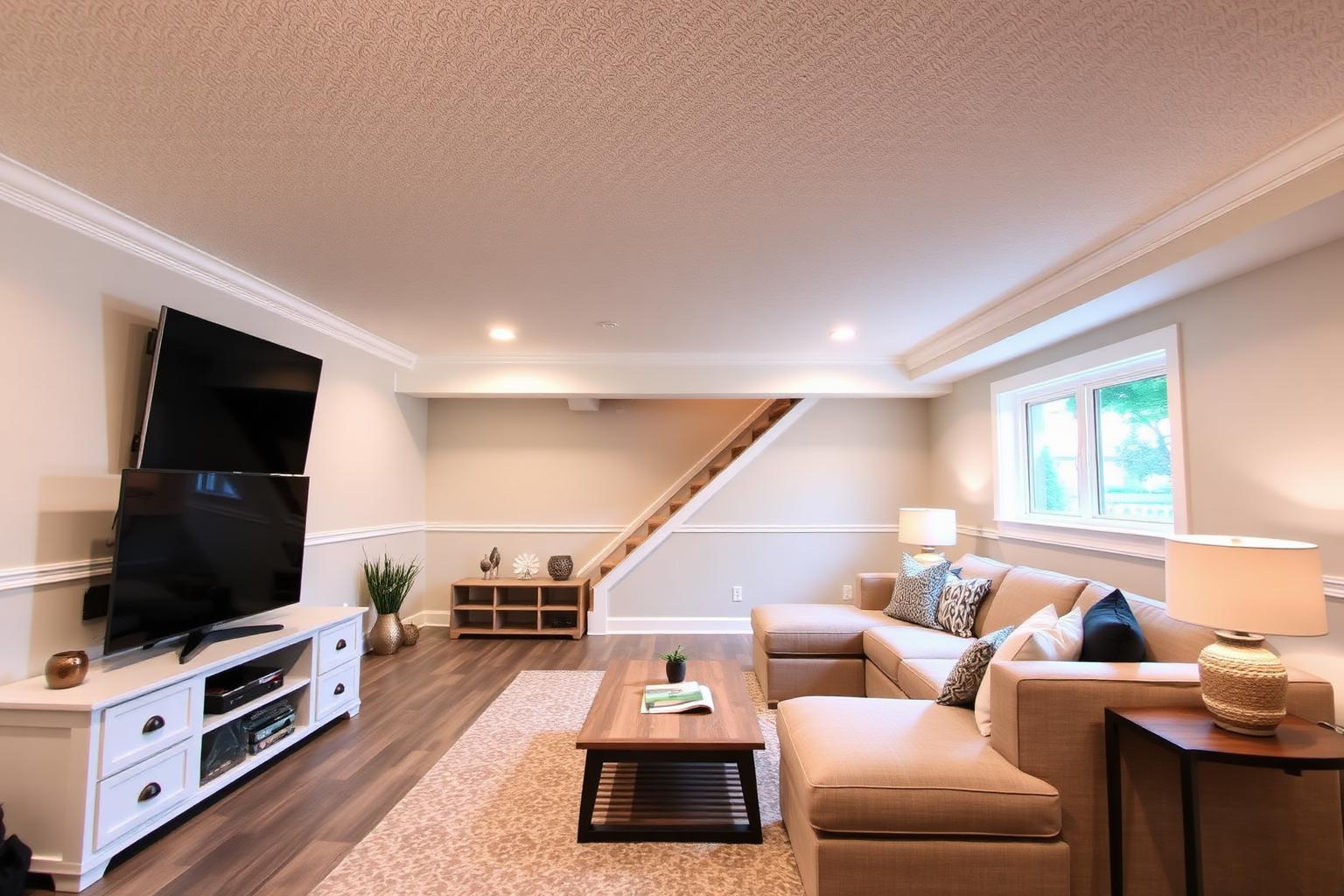
Drop Ceilings Are Back — and They Look Better Than You Remember
If your mental image of a "drop ceiling" is the dingy yellow grid in a 1970s church basement, you're not alone. For a long time, suspended ceilings carried a reputation as the cheap, institutional alternative to a "real" finished ceiling. That reputation is outdated. In 2026, drop ceilings are quietly winning back basement remodels across Lake County — and the finished product looks nothing like what your grandparents grew up with. Here's why we're installing more drop ceilings than ever, and how today's homeowners are designing them to look genuinely sharp.
What's Changed in the Last Decade
Three things have shifted the drop ceiling conversation:
- Tile design has caught up. Modern smooth white tiles, tegular (recessed-edge) tiles, faux tin, faux wood, and decorative coffered options bear no resemblance to old "fissured" panels.
- LED panel lights dropped in price. Slim-profile recessed LED panels integrate directly into the grid for a clean, modern look that wasn't practical or affordable ten years ago.
- Homeowners got more practical. After enough leaky pipes, electrical upgrades, and HVAC fixes have required someone to cut open a drywall ceiling, the value of "easy access" has gone way up.
The result: drop ceilings are no longer the budget compromise. They're often the preferred choice — especially in basements.
The Real Reasons Homeowners Choose Drop Ceilings Today
1. Access Is a Feature, Not a Bug
Anyone who's lived in a home for a decade has had a plumbing surprise. A pinhole leak in a copper line, a slow drip from an upstairs toilet flange, a connection that wasn't quite tight on a hot water heater hookup. In a drywall basement ceiling, every one of those becomes a cut-it-open, patch-it, mud-it, sand-it, prime-it, paint-it repair. In a drop ceiling, it's a pop-out-the-tile fix that takes minutes. That alone sells most homeowners.
2. Lighting Looks Better
Modern recessed LED panel lights are made for grid systems. Drop a 2x2 or 2x4 panel into the grid, hook up the driver, and you have soft, even, dimmable light across the entire basement. No surface-mounted fixtures cluttering the ceiling. No bare bulbs. No retrofit cans cut into drywall. Just clean, modern light.
3. Acoustics Are Quieter
Ceiling tiles absorb sound. A drywall basement ceiling tends to bounce noise back into the room, and noise from upstairs (kids, footsteps, dishwashers) transmits more clearly through it. Drop ceiling tiles — especially the sound-rated options we install in home theaters — soften both. For multi-use basements (kids playing, partner working from home), that's a real quality-of-life improvement.
4. Cost Leaves Budget for the Rest
For roughly the same money as a drywall ceiling alone, you can do a drop ceiling plus quality LED lighting plus still have budget left for flooring, paint, and trim. In most remodels we work on, the homeowner's budget is the real constraint — and a drop ceiling stretches it further.
5. Faster Project Timeline
A drop ceiling typically takes 1–2 days. Drywall takes 4–5 days when you account for mudding, drying, sanding, priming, and painting. For homeowners trying to host a graduation party in three weeks, the timeline matters.
Six Drop Ceiling Design Ideas for a Modern Basement
If you've been picturing tired beige fissured tiles, here are six directions that take a drop ceiling somewhere unexpected.
1. All-White Smooth Tiles with Slim LED Panels
This is the most popular look we're installing right now. Crisp white smooth tiles in a basic white grid, paired with 2x2 slim LED panels evenly spaced. Clean, modern, almost reads as a flush drywall ceiling at a glance.
2. Tegular (Recessed-Edge) Tiles for a Coffered Look
Tegular tiles drop slightly below the grid, creating a soft shadow line that mimics a coffered ceiling. Elegant, more dimensional, and only a small upcharge over standard tiles.
3. Faux Tin Tiles for a Vintage Bar Look
Faux tin tiles (lightweight molded panels that mimic the pressed tin ceilings of old taverns) bring serious personality to a basement bar or game room. Available in copper, bronze, silver, and antique white finishes.
4. Faux Wood Plank Tiles
A few tile lines now offer plank-look surfaces in light oak, walnut, and gray-washed finishes. They give a warmer, lodge-y feel to a finished basement without the moisture risk of real wood.
5. Painted Black Grid with White Tiles
A small but striking change: spray the grid flat black before installation, then drop in white tiles. The contrast makes the ceiling feel sharper and more architectural. Pairs especially well with modern furniture.
6. Mixed Grid with Wood Beam Trim
For larger basements, we sometimes break the room into sections with a faux wood beam soffit, with drop ceiling on either side. The transition gives the space rhythm and breaks up what could otherwise feel like one big grid.
Common Concerns We Hear (and the Honest Answers)
"Won't a drop ceiling lower my ceiling too much?" Modern grids drop the ceiling 3–4 inches when planned well. In most basements, that puts you at 7'2" to 7'6" — still above the 7' minimum most codes require for finished space, and well above what you'd think looking up at it.
"Will it look like an office?" Only if you choose office-grade tiles. Modern smooth, tegular, or decorative tiles look nothing like a commercial drop ceiling.
"Do tiles sag over time?" Quality tiles in a normal basement environment hold up for decades. Cheap tiles in a humid basement can sag — which is why we recommend moisture-resistant or vinyl-faced tiles for damp Lake County basements.
"What about water damage?" A stained tile from a one-time leak is a $5 replacement. That same leak through drywall is a several-hundred-dollar repair. Drop ceilings handle water damage gracefully.
"Can I add recessed lights later?" Yes — much more easily than in drywall. We can pop a tile, run wiring, swap in a panel light, and you're done.
Where Drop Ceilings Pair Beautifully
Beyond the basic family room, we install drop ceilings in:
- Home theaters (sound-rated tiles, integrated LED accent lighting)
- Home offices (smooth white tiles, glare-free panel lighting)
- In-law suites (warm tiles, dimmable lights, soft acoustics)
- Workshops and craft rooms (bright, durable, easy-clean tiles)
- Wine cellars and bars (faux tin or coffered tiles for character)
- Laundry rooms (moisture-resistant vinyl tiles)
- Small office and commercial spaces above storefronts
How to Plan a Basement Remodel Around a Drop Ceiling
A few tips if you're starting from scratch:
- Decide on lighting first. Lighting layout drives grid layout. Plan recessed panel locations before ordering materials.
- Pick your tile in person if possible. Photos online don't capture the texture or sheen.
- Plan access tiles intentionally. Above plumbing shutoffs, electrical panels, and HVAC dampers.
- Don't forget the perimeter. Wall angle in a color or trim style that complements your walls makes a big difference.
- Coordinate with other trades early. If electrical or HVAC work is happening, it should happen before the grid goes up.
Ready to See What Yours Could Look Like?
If you're remodeling a basement — or finally finishing one after years of "we'll get to it" — we'd love to help. A drop ceiling is one of the most cost-effective, flexible, and surprisingly attractive upgrades you can make to a basement in 2026. Call or text Lake County Handymen at 330-715-5042, or request a free drop ceiling estimate. We work throughout Willoughby, Mentor, Painesville, Kirtland, Wickliffe, Eastlake, Willowick, and Willoughby Hills, and we'll walk through tile options, lighting ideas, and a realistic project budget with you on-site.