
Signs Your Bathroom Subfloor Needs Repair Before Retiling
8/31/2026
Protecting Your Investment with a Solid Foundation
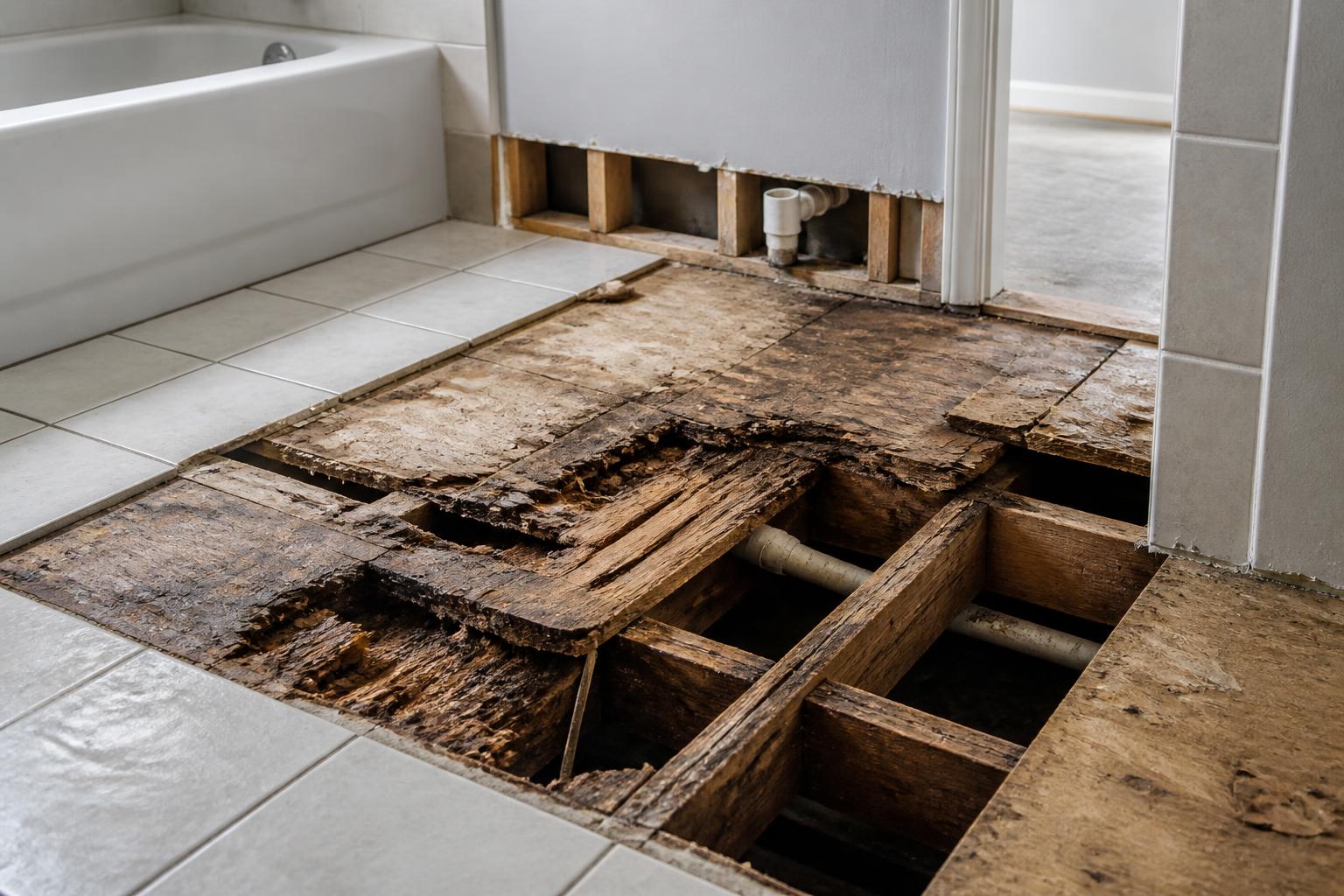
When homeowners in Lake County begin a bathroom remodel, the focus is often on the beautiful new porcelain tile or the modern vanity. However, the most critical component of a successful floor renovation is something you cannot see once the project is finished: the subfloor. In Northeast Ohio, where humidity changes and aging homes are common, subfloor integrity is often compromised by slow leaks or steam. Installing expensive tile over a damaged subfloor is a recipe for cracked grout and broken tiles within a few short months.
Sponginess or Soft Spots Underfoot
The most obvious sign of subfloor trouble is a physical sensation when you walk across the room. If you notice a particular area of the floor feels springy, soft, or "bouncy," the underlying plywood or OSB has likely lost its structural integrity. This is often caused by long-term moisture exposure that has delaminated the wood layers. If you feel a dip near the toilet or bathtub, it is imperative to pull up the existing flooring and inspect the wood before proceeding with any new installation.
Cracked Grout and Shifting Tiles
If your current tile floor has multiple cracks running through the grout lines—or worse, through the tiles themselves—it is rarely just a cosmetic issue. While tiles can crack if something heavy is dropped on them, widespread cracking usually indicates that the subfloor is flexing too much. A subfloor must be rigid to support the weight of tile and mortar. If the wood is rotting or was improperly installed, it will move under your weight, causing the rigid tile above it to snap.
Lingering Musty Odors and Mold
In the tight quarters of a bathroom, persistent smells can be a major red flag. If your bathroom smells damp or musty even after a deep cleaning, moisture may be trapped in the subfloor. This often happens due to a failing wax ring under the toilet or a slow leak behind the shower base. Because the subfloor is porous, it acts like a sponge, holding onto water and fostering mold growth that can eventually impact your home's air quality and the health of the floor joists.
Uneven Surfaces and Visible Water Stains
Before the new tile goes down, the floor must be perfectly level. If you notice a visible slope toward one corner or a hump in the middle of the room, the subfloor or the joists beneath it may be warping. Additionally, if you have access to the ceiling below the bathroom (such as from a basement or crawlspace in a Willoughby or Mentor home), look for dark water stains or dripping. Catching these issues from below can save you from a catastrophic floor failure later on.
If you are planning a bathroom refresh and want to ensure your new floor lasts for decades, Lake County Handymen LLC is here to help. We specialize in identifying structural issues and providing professional subfloor repairs for homeowners throughout Lake County. Contact us today to schedule a consultation and get a free estimate for your bathroom remodeling project.