
How Shade Ruins Your Siding — And What a Pressure Wash Really Does About It
7/10/2026
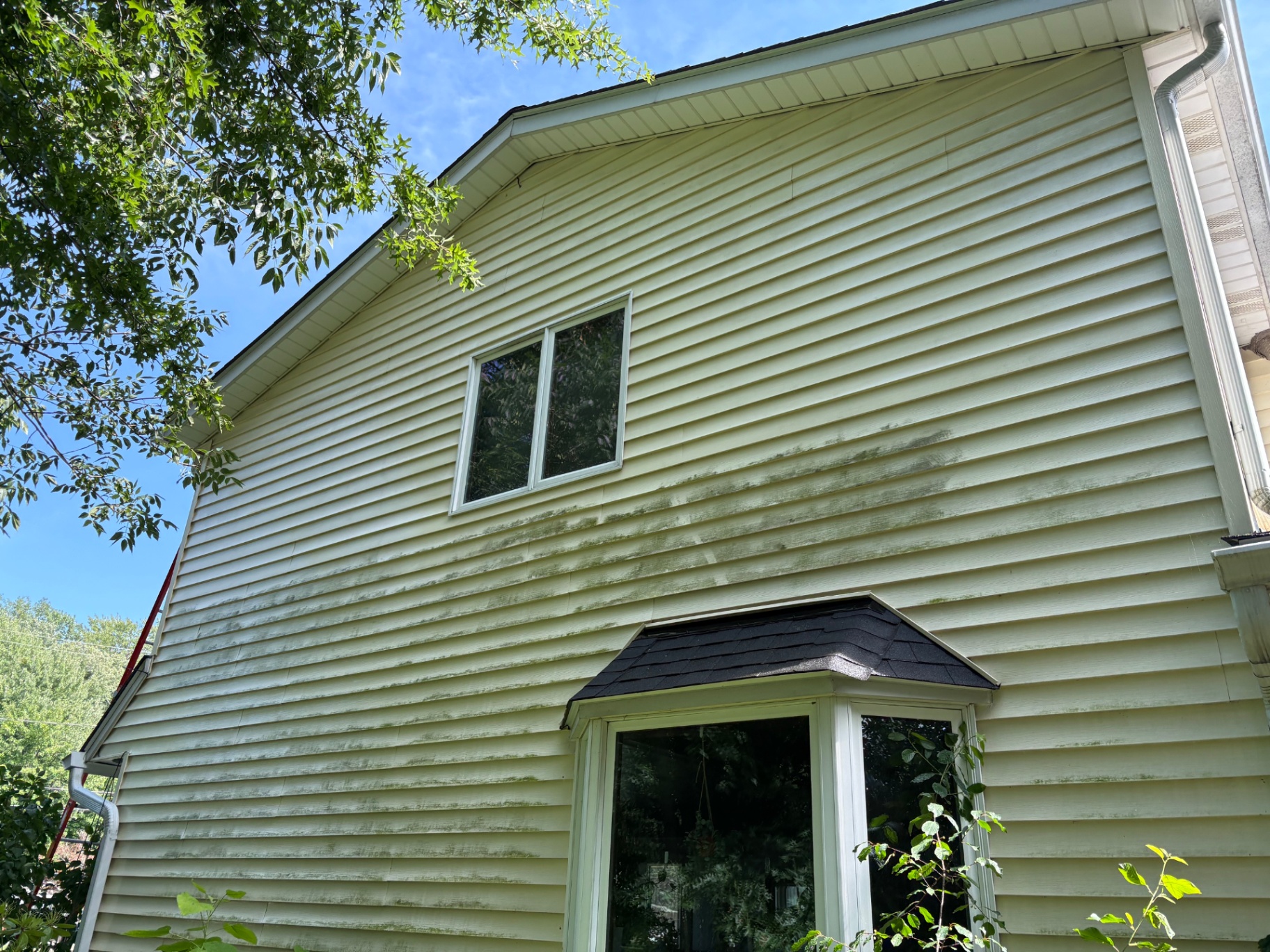
A Real Lake County Project: Dave Ivey's Mentor Home
On July 9, 2026 we worked with Dave Ivey of Mentor, Ohio on one of the most satisfying jobs a power washer can take on — the always-shaded side of his home.
If you've ever walked around a house in Northeast Ohio and noticed one side looks decades older than the rest, you're not imagining it. The side that never gets direct sun stays damp, cool, and covered in tree canopy. That's a five-star review for algae, mildew, and mold — and a slow death sentence for your siding.
Dave's siding told the story right away. The sunny sides of the house still looked clean and light green. The shaded wall, though, was streaked in grey and dark green from top to bottom, with heavy mold spotting under the eaves and around the bay window. Classic Lake County shade damage.
Why the Shady Side of Your House Looks So Much Worse
Vinyl, aluminum, and painted wood siding all react the same way to constant shade:
- Moisture never dries. Morning dew, rain, and humidity linger on the surface because the sun never bakes it off.
- Algae and mildew colonize the texture. Vinyl siding has ridges and grain that trap spores. Once they take hold, they spread horizontally along every lap.
- Mold pushes into the seams. Behind J-channel, under trim, and around windows — anywhere water sits, mold follows.
- The color fades unevenly. UV bleaches the sunny sides. The shaded side stays darker but gets stained on top of that base color, so it reads as dingy no matter what.
The result is a house that looks tired even when everything else about it is fine.
What a Brush And Pressure Washer Actually Do
There's a myth that pressure washing is just "spraying water at a house." On siding — especially aged, shaded siding — that's a great way to force water behind the panels and leave streaks everywhere.
Here's how we approach a job like Dave's:
1. Soft-scrub pre-treatment
Before the pressure washer ever touches the wall, we apply an outdoor cleaner (we like 30 Seconds Outdoor Cleaner and Simple Green for vinyl) and let it dwell. That does the actual killing of the organic growth. The pressure washer's job is just to rinse it off.
2. A brush where it matters
For heavy mold spots — under eaves, around trim, in the ridges of the siding — we work the surface with a soft bristle brush on an extension pole. Mechanical agitation on a pre-treated surface pulls out staining that a spray wand alone will never touch. This is where the "before and after" happens.
3. Surface-appropriate pressure
We run a Westinghouse WPX4400 but on siding we back the pressure down and use a wider spray angle at a controlled distance. The point isn't to blast the vinyl — it's to rinse what the cleaner already killed. Aim is always downward, never straight up under the laps, so water can't drive behind the siding.
4. Rinse landscaping before and after
Dave's bay window has plantings right underneath. We soak the beds and lawn before the cleaner goes up and again after everything comes down. That protects the plants and keeps runoff from staining the foundation.
Why Reducing Shade Is Half the Battle
Cleaning the siding is step one. Keeping it clean is where shade management comes in — and it's an angle most homeowners never think about.
- Trim back overhanging limbs. Anything within a few feet of the wall drips onto the siding after every rain and blocks the airflow that would otherwise dry it out. Even pulling branches back 3–6 feet dramatically changes how fast that wall dries.
- Cut back shrubs and bushes. Landscaping planted tight against the house traps moisture at the bottom of the wall. That's why the worst mold streaks usually start low and creep up.
- Clean the gutters above the problem side. An overflowing gutter drops a curtain of water down that same shaded wall every storm. It's the single biggest reason one wall stays wet longer than the others.
- Let air move. Once light and airflow can reach the siding, algae and mildew can't re-establish nearly as fast. A wall that dries within a few hours of rain simply doesn't grow the same organisms.
The pattern we see over and over in Lake County: a house gets washed, looks incredible for two or three years, and then the same shady wall starts streaking again — because nothing else changed. Trim the trees, prune the bushes, fix the gutter, and that same wash lasts a lot longer.
The Payoff
By the time we finished Dave's house, the shaded wall matched the rest of the home again. Same siding. Same color. It just hadn't been visible under years of shade-fed growth. That's the honest promise of a proper pressure wash: we're not repainting or replacing anything — we're giving you back the house you already own.
If your home has that one wall that always looks worse than the others, it's almost certainly not the siding. It's the shade.
Get a Free Quote
Lake County Handymen LLC serves Mentor, Willoughby, Willoughby Hills, Kirtland, Wickliffe, Eastlake, Painesville, Willowick, and the rest of Lake County, OH. If you'd like us to take a look at your shaded siding, call or text 330-715-5042 for a free, honest estimate — no upsell, no pressure.
Learn more about our power washing services or contact us to get on the schedule.