
Drop Ceiling vs. Drywall Ceiling: Basement Guide
9/9/2025
What Your Basement Ceiling Says About Your Home’s Potential
A basement unfinished is a basement underutilized—yet one of the most overlooked decisions in finishing a basement lies overhead: the ceiling. Whether you're renovating a home in Lake County or upgrading a property in Northeast Ohio, choosing between drop ceiling and drywall ceiling systems impacts not just aesthetics, but long-term functionality, indoor air quality, and overall property value. With basements prone to moisture fluctuations, temperature changes, and hidden structural elements like plumbing and HVAC ducts, your ceiling choice becomes a strategic balance of form and function.
This guide breaks down the pros, cons, and real-world considerations for each option, helping homeowners make informed decisions based on lifestyle needs, budget, and local climate challenges. You’ll learn how each ceiling type affects noise control, fire resistance, concealment of utilities, and maintenance demands—especially important in regions where humidity and seasonal weather stress building materials.
From cost-effective drop ceiling panels that simplify access to wiring and pipes, to sleek drywall ceilings that boost finished appeal and insulation performance, we’ll help you weigh what matters most. By the end, you’ll understand which solution aligns with your renovation goals—and how to avoid common pitfalls during installation.
What Is a Drop Ceiling and How Does It Work in Basement Renovations?
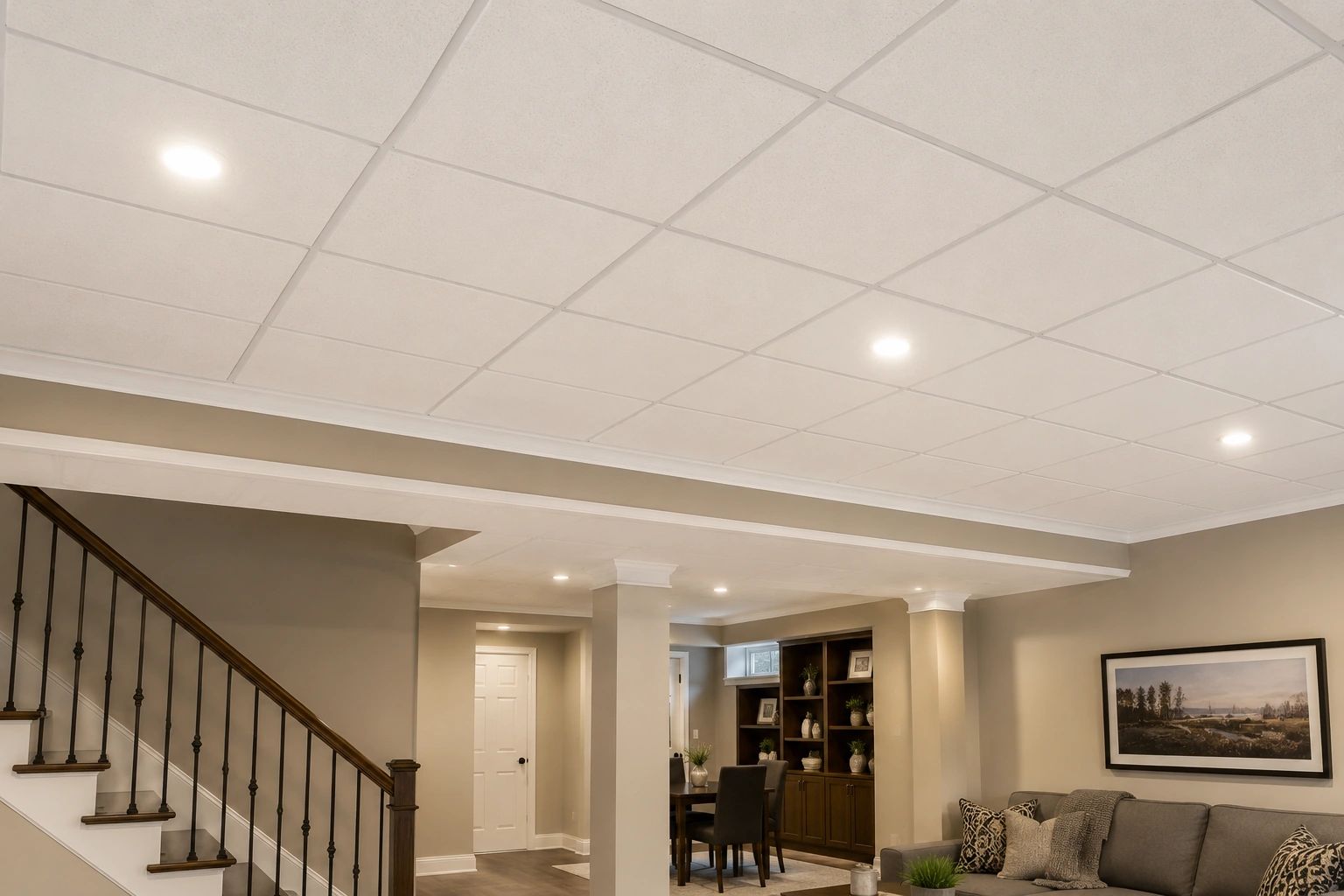
A drop ceiling, also known as a suspended ceiling, is a popular choice for basement remodeling projects due to its practical design and functional advantages. Unlike drywall ceilings that are permanently affixed, drop ceilings are installed beneath the structural floor above using a metal grid system that hangs from joists. This creates a concealed space above the ceiling plane—ideal for hiding HVAC ducts, electrical wiring, plumbing pipes, and sprinkler systems common in homes across Northeast Ohio.
Constructed from lightweight ceiling tiles or panels, drop ceilings are easy to install and simple to access when repairs or inspections are needed. Most systems use 2’x2’ or 2’x4’ panels made from moisture-resistant materials like vinyl or fiberglass, making them well-suited for basements where humidity and temperature fluctuations are concerns. These panels snap neatly into the grid, allowing homeowners or contractors to remove just one or two sections when servicing a pipe or outlet—without damaging the entire ceiling.
Key benefits include:
- Rapid installation compared to mudding and taping drywall
- Superior moisture resistance, crucial in damp environments like Lake County basements
- Easy access to utility systems for maintenance or upgrades
- Low maintenance and simple replacement of individual damaged tiles
This system is especially valuable in older homes where rerouting infrastructure is frequent. When durability and functionality matter, a drop ceiling offers a smart, long-term solution for finished basements.
Beyond the Surface: Why Drywall Ceilings Are a Top Choice for Basement Finishes
When transforming your basement into a functional living space, choosing the right ceiling system matters—both for comfort and long-term value. Drywall ceilings are a preferred option for homeowners across Northeast Ohio seeking a clean, finished look that blends seamlessly with the rest of the home. Unlike modular alternatives, drywall offers a smooth, continuous surface that elevates the room’s aesthetics while enhancing thermal and sound insulation performance.
Installing a drywall ceiling involves securing panels to ceiling joists, then applying joint compound, tape, and multiple coats to create a seamless finish. Once painted, the result is an elegant, low-profile ceiling that supports recessed lighting, ceiling fans, and other fixtures. Because drywall is non-perforated, it also acts as an effective air barrier—helping maintain consistent indoor temperatures and reducing energy costs in colder months.
From a comfort standpoint, drywall outperforms many alternatives in sound attenuation. Its mass helps block noise transfer between floors, making it ideal for home theaters, offices, or guest spaces in basements. In Lake County homes where basements often double as entertainment zones or rental units, this acoustic benefit is a major advantage. Plus, when paired with proper insulation and vapor barriers, drywall ceilings contribute to better moisture control—critical in below-grade environments.
Breaking Down the Basics: Cost, Maintenance, Installation, and Longevity Compared
When upgrading or finishing a basement in Northeast Ohio, selecting between a drop ceiling and drywall ceiling impacts both immediate expenses and long-term maintenance. Each option serves different needs depending on budget, timeline, and performance expectations—especially in regions like Lake County where moisture control and durability are critical.
Cost is often the first deciding factor. Drop ceilings typically cost less upfront, with average material prices 20–30% lower than drywall systems. They also reduce labor costs since installation doesn’t require taping, sanding, or texturing. Conversely, drywall involves higher material and labor expenses but provides a seamless, solid finish valued in permanent living spaces.
Installation time favors drop ceilings, which can be completed in a fraction of the time. A typical basement retrofit takes one to two days, compared to three to five days for drywall due to mudding, drying, and finishing stages.
In terms of maintenance, drop ceilings offer easy access to plumbing, electrical, or HVAC systems above—ideal for homes prone to basement moisture or frequent system checks. However, tiles can sag or discolor over time, especially in damp environments. Drywall requires no ongoing panel replacement but demands attention if cracks or water stains appear.
Durability leans toward drywall when properly sealed and insulated. It resists sagging and holds up well in stable environments, while drop ceiling tiles are more vulnerable to accidental damage and wear. For homeowners seeking long-term value and a polished look, drywall remains the preferred choice despite its higher initial investment.
Common Concerns About Basement Ceilings: What Homeowners Need to Know
Is moisture a major concern when choosing between drop ceilings and drywall?
Absolutely. In basements across Northeast Ohio, humidity, condensation, and potential water intrusion make moisture resistance a top priority. Drop ceilings offer easier access to plumbing and HVAC systems above, allowing quicker response to leaks. However, drywall requires proper sealing and vapor barriers to prevent moisture absorption, especially in damp environments like those found in Lake County homes.
Do I need a permit for installing a new basement ceiling?
Permit requirements vary by municipality. In cities like Painesville or Madison, minor cosmetic upgrades may not require permits, but structural changes or electrical work tied to ceiling installations often do. Always check with local building departments—avoiding permits might save time upfront but can cause complications during resale.
Which ceiling is easier to maintain long-term?
Drop ceilings win for accessibility. Damaged tiles can be swapped out in minutes, and the plenum space above remains open for inspections. Drywall, while seamless and polished, demands more caution—drilling or cutting for fixtures risks hitting wires or pipes. Properly finished drywall also requires repainting if damaged.
Can drywall sag or collapse in a basement?
Yes—especially if exposed to moisture. Drywall absorbs water quickly, weakening its core. In humid or flood-prone basements, improper fastening or undersized joists can lead to sagging over time. Use moisture-resistant (blue board) drywall and ensure proper spacing of framing to minimize risk.
Are drop ceiling tiles fire-resistant?
Many mineral fiber tiles are labeled as fire-resistant or non-combustible, meeting local code requirements. However, always verify ratings—especially if the basement includes a workshop, rental unit, or egress window setup where fire safety is critical.
How do I handle pipes and wires with either ceiling type?
Drop ceilings naturally conceal utilities, making them ideal for unfinished mechanical spaces. For drywall, you’ll need to insulate around obstacles or box in areas for access. Plan access panels for shutoff valves or electrical junctions to avoid cutting into drywall later.
Which option adds more value to my home?
Drywall provides a cleaner, finished look preferred by most buyers. While functional, drop ceilings are often associated with commercial spaces or temporary setups. When upgrading a basement for resale, drywall tends to offer better return-on-investment—especially when paired with proper insulation and moisture control.
Making the Right Choice for Your Basement Ceiling: What Matters Most
Choosing between a drop ceiling and drywall for your basement isn’t just about appearance—it’s a decision that impacts long-term value, functionality, and maintenance. Homeowners in Northeast Ohio, particularly in Lake County and surrounding areas, face unique challenges like humidity fluctuations, seasonal temperature changes, and older home infrastructure, making material performance a critical factor. Drop ceilings offer quick access to wiring and plumbing, moisture resistance, and cost-effective installation, ideal for utility-focused spaces or homes prone to humidity. On the other hand, drywall delivers a clean, finished look that boosts resale value, improves sound insulation, and enhances energy efficiency—perfect for basements being converted into living spaces.
When deciding, consider your end goal: Is this a storage area or a future home theater? Will you need frequent access to overhead systems, or are you prioritizing aesthetics and air sealing? Evaluate moisture levels, ceiling height, and your budget. Both options have strengths—drop ceilings bring practicality and ease, while drywall offers durability and polish. If moisture is a concern, pairing drywall with proper vapor barriers and dehumidification can make it a viable, long-term choice.
Take action by assessing your basement’s current conditions, mapping out your intended use, and consulting a local professional familiar with regional building practices. Whether you lean toward function or finish, making an informed decision ensures your basement ceiling performs well for years to come. Take the next step—your ideal basement transformation starts from the top down.