
Can Power Washing Damage Your Siding?
2/18/2026
The Hidden Risks Behind a High-Pressure Clean
Power washing can breathe new life into tired siding—but only when done correctly. Many homeowners in Lake County and surrounding areas turn to pressure cleaning to restore curb appeal, remove stubborn grime, and prepare exterior surfaces for sealing or painting. However, improper technique or excessive pressure can lead to costly damage, including cracked vinyl, gouged wood fibers, and moisture intrusion behind panels. Understanding the balance between effective cleaning and surface safety is critical, especially for homes exposed to Northeast Ohio's freeze-thaw cycles and humid summers.
This guide breaks down how power washing works on common siding materials like vinyl, fiber cement, and wood, and why nozzle selection, PSI levels, and spray angle matter more than most realize. You'll learn key warning signs of overspray damage, best practices for pre-treatment, and why many professionals recommend soft washing for delicate surfaces. We'll also cover seasonal considerations for local climates, including the risks of late-fall washing and trapped moisture. By the end, you'll know how to protect your home's exterior while achieving a clean, streak-free finish that boosts both appearance and longevity.
How Different Siding Materials React to Power Washing
- Vinyl Siding – Durable but Not Invincible. While vinyl is engineered to withstand the elements, high-pressure washing can still cause issues like cracking or loosening panels if improper techniques are used. The ideal approach involves medium pressure (1,200–1,500 PSI) and a wide-angle nozzle to clean without forcing water behind the panels. In areas like Painesville and Willoughby, where temperature swings and moisture are common, trapped water can freeze and expand, leading to warping. Regular cleaning removes algae and dirt buildup, preserving both appearance and longevity.
- Wood Siding – Beautiful but High-Maintenance. Wood, including cedar and pine, demands the gentlest treatment. High pressure can gouge soft fibers, accelerating decay and inviting moisture intrusion. Instead, low-pressure washing (500–1,000 PSI) with a soft wash solution is recommended to lift grime and mildew without damaging the surface. In humid Lake County climates, this method prevents mold regrowth and prepares wood for sealing, helping maintain its natural beauty year after year.
- Fiber Cement – Tough with a Caution. Brands like Hardie siding are highly resistant to damage, but improper power washing—especially with a zero-degree nozzle—can chip edges or erode the surface. Use moderate pressure and maintain a consistent distance. This material performs well in Northeast Ohio's extreme seasons when cleaned gently every 1–2 years.
- Aluminum Siding – Prone to Dents and Dimpling. Though rust-resistant, aluminum dents easily under high pressure. Cleaning should focus on low-PSI rinsing and detergent application to remove oxidation and stains without altering the surface integrity.
- Stucco – Vulnerable to Erosion. The textured surface traps dirt, but aggressive pressure can remove the finish coat, leading to pitting and water infiltration. A soft wash method preserves detail while effectively cleaning.
Master the Right Technique: Safely Power Wash Any Siding Type
- Identify Your Siding Material. Start by confirming whether your home has vinyl, aluminum, wood, fiber cement, or stucco siding. Each material has unique pressure tolerances; for example, vinyl typically handles 1,300–1,600 PSI, while soft wood siding requires no more than 500–800 PSI.
- Choose the Correct Nozzle Tip. Use a wide-angle fan tip (40-degree is ideal) to disperse pressure evenly and reduce the risk of gouging. Narrow tips concentrate force and should be avoided on delicate surfaces.
- Pre-Wet and Apply Cleaner. Beginning at the bottom, lightly pre-wet the siding to prevent premature drying of detergent. Apply a manufacturer-approved cleaning solution with a pump sprayer, starting from the top down to avoid streaking.
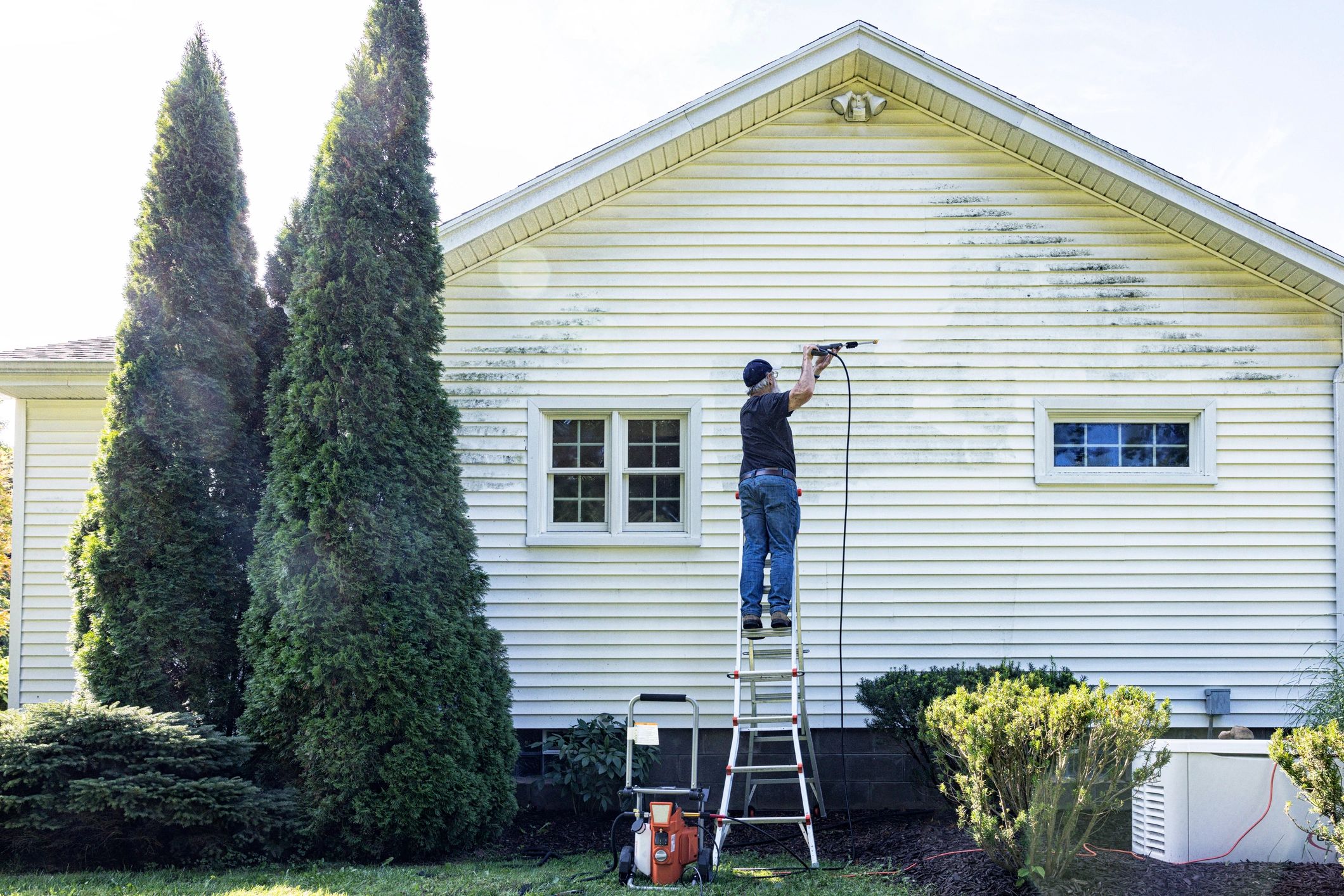
- Maintain Proper Distance and Angle. Hold the wand 12–18 inches from the surface and keep it at a consistent 45-degree angle. Never point the stream upward, as this can force water beneath panels and cause moisture damage.
- Use Smooth, Overlapping Passes. Work in small sections, using slow, horizontal sweeps. Overlap each pass slightly to ensure even cleaning without leaving stripes.
- Rinse Thoroughly from Bottom to Top. Rinse in the same sweeping motion, starting low and moving upward. This flushes dirt downward and prevents dirty water from re-depositing on clean areas.
Always test on a small, inconspicuous area first, especially for older or painted siding. For homes in humid regions like Northeast Ohio, schedule cleanings every 1–2 years to prevent mold regrowth and maintain curb appeal.
Power Washing Siding: Your Top Questions Answered
Can power washing damage vinyl, wood, or fiber cement siding? Yes—when performed incorrectly. While power washing effectively removes mold, dirt, and pollutants, excessive pressure or improper nozzle angles can crack vinyl, gouge wood, or dislodge fiber cement coatings. Each material has a pressure tolerance—typically 1,200 to 1,500 PSI for vinyl and slightly higher for harder surfaces—requiring careful calibration to prevent harm.
What are the risks of DIY power washing on siding? Homeowners often underestimate nozzle distance and spray patterns, leading to water intrusion behind siding, splintered wood fibers, or discolored panels. Using a zero-degree tip or holding the wand too close intensifies damage risks, especially on older or already compromised surfaces in humid areas like Lake County.
How do manufacturers recommend cleaning siding safely? Most endorse low-pressure washing with a wide fan tip (25- to 40-degree) and a soft, biodegradable detergent. This method dissolves grime without abrasion. Rinsing from the bottom up helps prevent water from being forced under panels, a common cause of interior moisture damage.
Should I hire a professional for my siding cleaning? For multi-story homes, delicate materials, or heavy mold buildup, professional experience ensures proper technique and equipment use. Technicians assess material type, adjust pressure settings, and use detergent solutions that comply with regional environmental standards.
How often should siding be power washed? Every 1–3 years, depending on exposure to shade, moisture, and airborne pollutants. Homes near trees or in high-humidity zones benefit from more frequent cleanings to deter organic growth and maintain appearance.
Protecting Your Siding: Smart Maintenance for Lasting Results
Power washing can dramatically improve your home's exterior, but only when done with care and knowledge. As demonstrated, high-pressure cleaning has the power to restore appearance by removing dirt, mildew, and environmental grime—but improper technique can compromise siding integrity, leading to water intrusion, warping, or irreversible surface damage. Different materials—whether vinyl, fiber cement, wood, or aluminum—require specific pressure levels, nozzle types, and cleaning approaches to achieve optimal results without harm. Understanding these nuances is critical, especially in regions like Lake County and surrounding Northeast Ohio areas where seasonal weather fluctuations place added stress on exterior surfaces.
To maintain your home safely:
- Assess your siding type first—each has unique pressure tolerance
- Use low to medium pressure (500–1,500 PSI) for delicate surfaces
- Choose wide-angle nozzles (25–40 degrees) to reduce impact risk
- Avoid direct spraying at seams, gaps, or caulking to prevent moisture entry
- Schedule cleanings every 1–3 years, depending on exposure and environment
Regular, informed maintenance protects both curb appeal and structural longevity. If in doubt, consult a trained professional who understands local climate challenges and siding best practices. Taking a thoughtful, cautious approach ensures your home looks its best while standing strong for years to come.